

Palworld hit its official 1.0 launch on July 10, 2026, transforming from early access phenomenon into a tournament-ready title available across PS5, Xbox Series, Xbox One, and PC at $29.99. With over 200 Pals now in the roster and the massive World Tree endgame zone pushing cooperative gameplay to new heights, this creature-collection survival game has become a serious contender for esports events and LAN tournaments.
The 1.0 release resolved the platform fragmentation that plagued early access, creating a unified competitive environment perfect for multi-platform tournaments. Whether you’re planning a corporate team-building event or a weekend gaming marathon, Palworld’s blend of base-building, survival mechanics, and creature combat offers flexible format options that scale from casual showdowns to high-stakes competitive play.
For event organizers and venue managers, the technical requirements are straightforward. The game supports both local co-op configurations and online multiplayer, making it adaptable to different event sizes and streaming setups. Broadcasting Palworld tournaments requires attention to the game’s fast-paced combat and base-building elements, but the visual spectacle of Pal battles translates exceptionally well to spectator viewing.
This guide covers everything you need to integrate Palworld into your event lineup: hardware specifications across all platforms, optimal tournament formats that highlight the game’s competitive depth, streaming configurations for maximum viewer engagement, and practical setup workflows drawn from our experience running hundreds of gaming events. The full release has stabilized the meta and ironed out the technical hiccups that made early access tournaments risky.
What Makes Palworld a Tournament-Ready Title
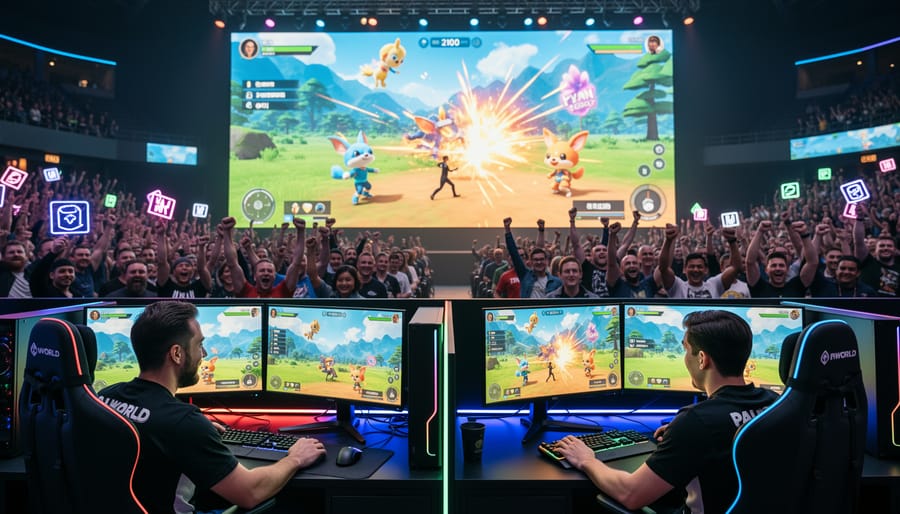
Palworld’s jump to 1.0 brings a game that’s been quietly proving itself as a competitive contender since its early access days. What sets it apart for tournament use isn’t just the creature-collection hook, it’s how the survival and base-building layers create moment-to-moment decisions that translate beautifully to live viewing.
The multiplayer foundation supports up to 32 players per server, giving event organizers flexibility to structure everything from intimate 1v1 Pal battles to sprawling faction wars. Players collect, train, and deploy their Pals in combat while simultaneously managing resources, building bases, and crafting gear. That multi-threaded gameplay means there’s always something happening on screen, which keeps audience attention locked in during broadcasts.
Several features make Palworld particularly tournament-friendly:
- Scalable PvP modes that work for quick exhibition matches or extended campaign-style events
- Visual variety through 200+ distinct Pals, each with unique abilities and combat animations
- Strategic depth from the crafting and base-building systems that reward planning over pure reflexes
- High entertainment value when Pals perform unexpected actions or pull off clutch saves
- Clear win conditions across different game modes, from survival challenges to direct combat
The spectator experience benefits from Palworld’s vibrant art style and readable action. Unlike shooters where split-second movements can be hard to follow, Pal abilities have clear visual telegraphs and satisfying payoffs. When a player’s dragon-type Pal swoops in to defend their base or a team coordinates a multi-Pal assault, viewers immediately grasp what’s happening.
For campus events or corporate team-building sessions, the cooperative elements shine. Teams can divide responsibilities, some players focus on Pal training, others on base defense, still others on resource gathering, creating natural role specialization that mirrors team sports dynamics. The $29.99 price point doesn’t hurt either, making it cost-effective to build out rental libraries that serve multiple concurrent events.
The 1.0 Launch: What’s New and Why It Matters
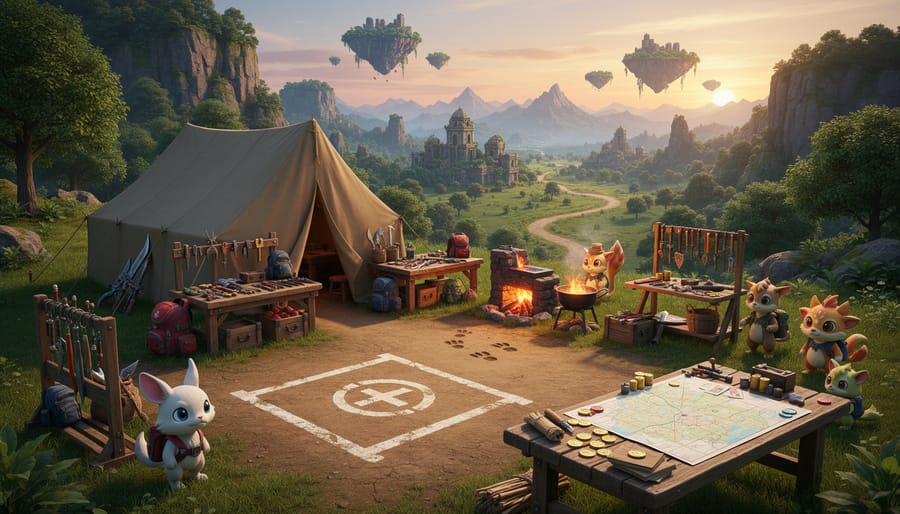
July 10, 2026 marked a turning point for Palworld as it shed its early access label and launched as a complete game. After two and a half years of testing, tweaking, and building momentum, the 1.0 release brought substantial content additions that fundamentally change how you’ll want to approach events around this title.
The headline feature is the expanded Pal roster. The update added 72 new creatures, pushing the total past 200 unique Pals. That’s not just a numbers game. For tournament organizers, it means exponentially more team compositions, counter-strategies, and unexpected moments that keep audiences glued to screens. Each new Pal brings distinct abilities and visual designs, giving competitors fresh tools to experiment with and commentators more to discuss during downtime between matches.
But the World Tree endgame zone is where 1.0 truly shines for competitive play. This massive area serves as a late-game gauntlet that tests resource management, combat skills, and strategic planning under pressure. It’s designed to challenge even experienced players, creating natural climax moments in tournaments. When a team reaches the World Tree during a live event, you’ve got built-in tension that translates directly to viewer engagement. The zone’s scale and complexity mean no two runs look identical, solving the repetition problem that plagues some survival game tournaments.
These additions directly address what makes Palworld compelling for spectators. The creature variety gives viewers something visually interesting to follow, while the endgame content provides clear progression milestones. You’re not watching players wander aimlessly or grind resources for hours. The 1.0 structure creates distinct phases within gameplay that map naturally to tournament brackets and streaming segments.
From a practical standpoint, the official release signals stability. Early access titles can be risky for event planning due to potential bugs or sudden balance changes. The 1.0 stamp means Pocketpair considers the game feature-complete and tournament-ready. You can build event formats around the current mechanics with confidence they won’t shift dramatically between your planning phase and event day.
Platform Setup for Palworld Events
Setting up Palworld tournaments means working with four distinct platforms, each bringing its own advantages to your event lineup. Since the 1.0 launch on July 10, 2026, you’ve got a wider range of hardware options than most new releases, which creates flexibility for mixed rental inventories and diverse audience preferences.
The platform landscape breaks down practically for event organizers:
| Platform | Performance Profile | Best Event Use Case |
|---|---|---|
| PC | Highest visual settings, 60+ fps capability, adjustable specs | Competitive tournaments, streaming setups, LAN events |
| PS5 | Consistent performance, fast loading, controller-first design | Console-focused events, casual gaming kiosks, team-building sessions |
| Xbox Series X/S | Strong performance, Game Pass integration, familiar ecosystem | Multi-title tournaments, corporate events, campus esports programs |
| Xbox One | Lower specs but functional, budget-friendly option | Casual play areas, secondary stations, budget-conscious rentals |
PC setups give you the most control for serious competitive play. Target mid-to-high-end rigs with dedicated GPUs, at least 16GB RAM, and SSD storage to handle the expanded world content from 1.0. The 200+ Pal roster and that massive World Tree zone demand decent hardware to avoid framerate drops during intense multiplayer moments. For broadcasting, PC configurations let you run capture software directly on the gaming machine or split to dedicated streaming rigs.
Console options simplify the technical side considerably. PS5 and Xbox Series X/S deliver smooth performance right out of the box, making them ideal when you’re running multiple stations with less technical oversight. Xbox One works fine for casual event spaces where cutting-edge performance isn’t critical, though you’ll notice longer load times between areas.
Here’s the catch: Palworld doesn’t support cross-platform play. Your tournament needs to pick one ecosystem and stick with it. For mixed events, consider running separate brackets per platform or designating specific time blocks for each system. At $29.99 per copy, building a multi-platform library stays budget-friendly compared to premium titles.
Network infrastructure matters more than the platform choice. Set up wired connections for all stations, allocate sufficient bandwidth for simultaneous multiplayer sessions, and test your setup with a full player load before event day. Wireless might work for solo kiosks, but competitive multiplayer demands ethernet stability to prevent disconnects during crucial moments.
Broadcasting Palworld: Technical Considerations
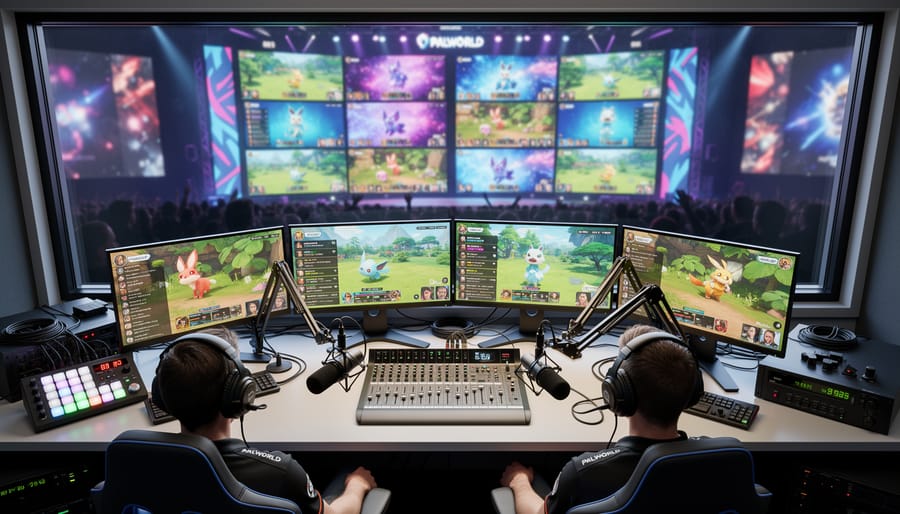
Palworld’s vibrant visuals and fast-paced creature battles demand thoughtful broadcast execution. Getting your live streaming equipment setup right means viewers stay engaged with both the strategic gameplay and the personalities behind the controllers.
Start with a three-camera approach when possible. Your primary feed captures full gameplay at 1080p minimum, Palworld’s colourful environments and detailed Pal designs lose impact at lower resolutions. Position a secondary camera on player reactions during intense moments: those “did that just happen?” expressions when a rare Pal appears or a base gets raided add personality to your stream. A third overhead or side-angle camera works brilliantly during team events, letting you cut to strategizing moments between rounds.
Split-screen layouts work particularly well for Palworld. Dedicate 70% of screen real estate to gameplay with player cams in picture-in-picture format. During downtime, base building, inventory management, flip the ratio to feature players discussing strategy while gameplay runs smaller. This keeps the broadcast dynamic rather than watching someone sort items for two minutes straight.
Palworld’s gameplay loop benefits from live ticker overlays tracking key metrics: current Pal count, base level, resources gathered, and time remaining in timed challenges. These data points give viewers context without requiring constant verbal explanation, freeing up your commentary examples to focus on strategy and storytelling. Consider highlighting newly-caught Pals with animated pop-ups, audiences love seeing roster additions in real-time.
Audio mixing deserves extra attention. Game sound effects (especially Pal cries and combat audio) should sit slightly below commentary levels. TV-style esports commentary works when you balance play-by-play with analysis of resource management decisions and team coordination.
For multi-station events, centralized esports production broadcast control lets you switch between players mid-match. Director-style cuts to whoever’s experiencing the most action, a base defense, a boss battle, a clutch Pal capture, maintain viewer engagement better than locked single-player perspectives.
Event Formats That Work for Palworld
Palworld’s gameplay lends itself to multiple event formats, making it versatile enough for everything from drop-in campus activities to structured competitive tournaments. The key is matching the format to your audience’s commitment level and your event’s objectives.
For campus esports programs, consider starting with accessible entry points that gradually build engagement:
- Casual kiosk play: Drop-in stations where students explore the game at their own pace, perfect for student unions or gaming lounges seeking low-pressure engagement.
- Team survival challenges: 2-4 hour sessions where small teams compete to establish the most advanced base or survive the longest against environmental threats.
- Pal collection competitions: Timed events where players race to capture specific rare Pals or achieve the most diverse collection within set parameters.
- Full tournament brackets: Multi-day competitions with standardized starting conditions, judged on base development metrics, resource gathering efficiency, or PvP encounters.
Corporate team-building events benefit from Palworld’s collaborative base-building mechanics. Structure 90-minute sessions where departments work together to construct functional bases, assign roles based on different Pal abilities, and solve resource management challenges. The game’s lighthearted tone keeps things fun while promoting strategic thinking.
For competitive tournaments, focus on measurable objectives. Time-based challenges work well: which team can defeat a specific boss Pal fastest, gather the most resources in 60 minutes, or reach predetermined base development milestones. These formats create clear winners while showcasing different strategic approaches.
Extended gameplay sessions suit weekend gaming marathons or multi-session campus leagues. Palworld’s progression systems reward sustained play without demanding the reflexes of traditional esports titles, making it inclusive for broader skill ranges. At $29.99 per license, building a rental library for eight-station events remains budget-friendly compared to AAA titles.
Palworld’s 1.0 launch positions it as one of the most accessible and versatile additions to your event catalog in 2026. The $29.99 price point makes building a rental library incredibly budget-friendly, you can outfit multiple stations without breaking the bank, whether you’re running a campus tournament or a corporate team-building session. Cross-platform support across PS5, Xbox Series, Xbox One, and PC means you’re not locked into expensive hardware requirements, and you can accommodate whatever setup your venue or clients prefer.
The game’s spectator-friendly qualities shouldn’t be overlooked. Those vibrant Pals and dynamic survival mechanics create engaging viewing experiences that keep audiences invested, whether they’re watching live or via stream. The blend of familiar creature-collection elements with competitive multiplayer action appeals to both hardcore gamers and casual participants, expanding your potential audience reach significantly.
If you’re looking to refresh your gaming lineup with something that generates buzz and delivers solid event value, Palworld deserves serious consideration. It’s tournament-ready, wallet-friendly, and perfectly positioned to attract the crowds you want at your next esports event.