
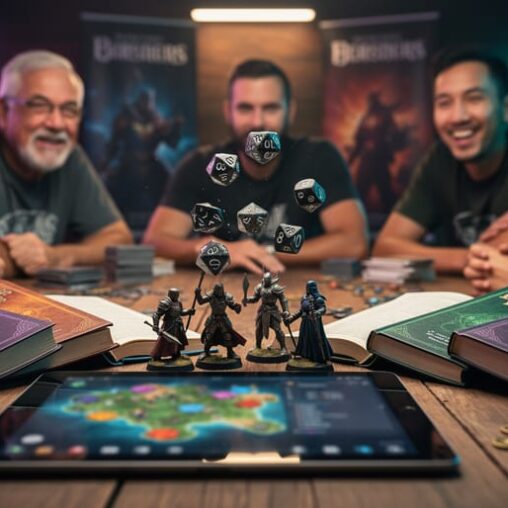
Tabletop RPG systems have surged back into the mainstream spotlight in 2026, driven by innovative crowdfunding campaigns, digital integration tools, and a wave of fresh modules hitting the market. Whether you’re organizing a gaming event or looking to expand your entertainment lineup, six core systems stand out: Dungeons & Dragons 5th Edition for broad appeal, Pathfinder 2nd Edition for tactical depth, Powered by the Apocalypse games for narrative flexibility, Blades in the Dark for intense heist scenarios, Kids on Bikes or Tales from the Loop as accessible entry points, and Call of Cthulhu for horror-themed experiences.
The TTRPG revival connects directly with the competitive gaming community. Events like RPGA-Con 2026 showcase how tabletop roleplaying complements esports programming, offering a different kind of collaborative experience that appeals to the same demographic. For event organizers, TTRPGs provide low-overhead, high-engagement content that scales from intimate gatherings to large convention halls. The broadcasting potential is real too, with actual-play streams proving that compelling storytelling translates beautifully to digital audiences.
What makes 2026 different? Crowdfunding platforms continue to deliver experimental systems alongside established brands, while virtual tabletop technology has matured enough to support hybrid events seamlessly. This convergence creates opportunities for venues and organizers who understand both the social draw of in-person play and the reach of digital broadcasting. The systems we’re covering represent proven options that work across both formats, backed by active communities and ongoing support.
Why Tabletop RPG Systems Are Gaining Momentum in 2026
The TTRPG landscape in 2026 looks dramatically different than just a few years ago. Crowdfunding platforms have become the primary launchpad for innovative systems, with Kickstarter campaign metrics showing consistent success for new modules and standalone games. This funding model allows smaller publishers to compete alongside established names, creating a diverse ecosystem of tabletop RPG systems that cater to every play style imaginable.
New Dungeons & Dragons modules continue releasing alongside robust Virtual Tabletop updates, bridging the gap between in-person sessions and digital gameplay. These VTT platforms let remote players join local tables through shared screens, which translates perfectly to event streaming setups. Event organizers are recognizing this convergence. When your venue already has broadcast infrastructure for esports tournaments, adding TTRPG stations requires minimal additional investment while attracting a complementary audience.
Events like RPGA-Con 2026, featuring 9 Dungeons & Dragons tables plus 31 other TTRPG systems, demonstrate the community’s breadth and energy. Gaming venues that previously focused exclusively on console or PC competitions now dedicate space to collaborative storytelling, recognizing that players who enjoy tactical esports often appreciate the strategic depth systems like Pathfinder 2nd Edition offer. This crossover creates longer event attendance and more diverse revenue streams for organizers.
How We Chose These Systems
We evaluated dozens of tabletop RPG systems through the lens of event execution, not just gameplay quality. Our criteria focused on four key factors: versatility across different event formats (from corporate team-building to convention tournaments), a learning curve gentle enough for first-timers while offering depth that keeps experienced players engaged, technical compatibility with streaming equipment and broadcast overlays, and group dynamics that scale from intimate four-player sessions to spectator-friendly demonstrations. The systems we selected have all proven themselves in real-world event settings where you need reliable session timing, minimal setup friction, and the ability to create compelling content whether you’re running a single kiosk or an entire TTRPG lounge alongside your esports stations.
1. Dungeons & Dragons 5th Edition, The Crowd-Pleaser
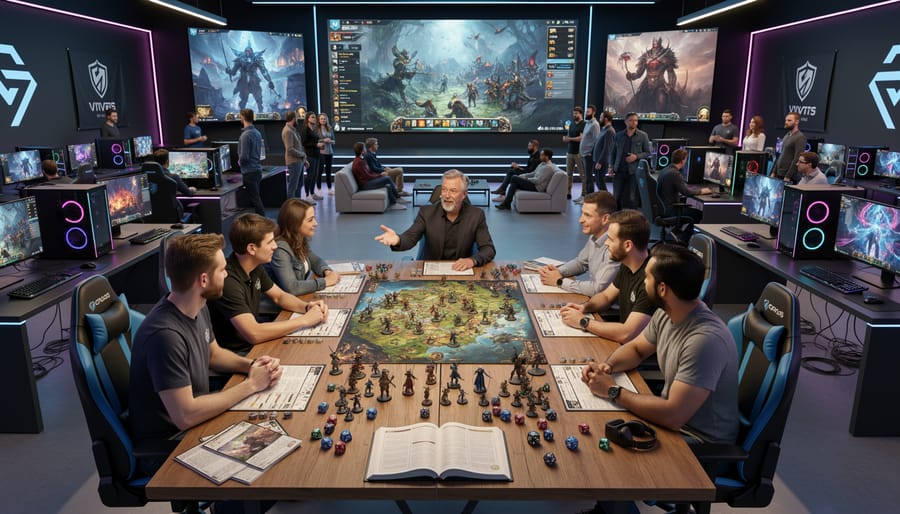
D&D 5E remains the natural starting point for events looking to blend tabletop RPG systems with existing gaming setups. Its streamlined ruleset handles both complete newcomers and veteran players without grinding sessions to a halt, which matters when you’re running timed event blocks alongside tournament schedules. The core mechanic, roll a d20, add your modifier, beat the target number, takes about three minutes to explain, letting participants jump into actual play instead of spending half your event slot on rules explanation.
The system’s strength for event organizers lies in its massive module library. You can run anything from a one-hour dungeon crawl to a full campaign arc, with pre-written adventures designed for specific player counts and time frames. The 2026 release calendar continues adding fresh content, keeping the system relevant for repeat events. Virtual tabletop integration means you can project the game map on screens for audience viewing while players roll physical dice at the table, creating a hybrid experience that translates well to live streams with overhead cameras capturing both digital assets and player reactions.
For corporate team-building sessions or university esports clubs expanding their offerings, D&D 5E delivers recognizable branding that attracts curious participants who’ve heard of the game but never played. The system’s balance between structure and improvisation lets game masters adjust difficulty on the fly, accommodating the unpredictable energy levels and group dynamics typical of convention play. Its ubiquity also simplifies staffing, finding experienced facilitators for D&D is considerably easier than sourcing specialists for niche systems.
2. Pathfinder 2nd Edition, For Tactical Gaming Fans
Pathfinder 2nd Edition sits squarely in the sweet spot for esports-minded players who treat character building like they approach competitive deck construction or team composition. This system offers the tactical depth and mechanical precision that appeal to gamers who thrive on optimization, presenting a three-action economy that creates genuine strategic decision-making each turn rather than rote attack-move-repeat cycles.
The ruleset’s emphasis on positioning, team synergy, and resource management mirrors competitive gaming principles. Your fighter’s placement matters as much as their weapon choice. Your caster’s spell selection requires the same forward-thinking preparation competitive players apply to loadouts or draft picks. Unlike simpler systems, Pathfinder 2nd Edition rewards players who dig into math and mechanics, creating natural appeal for audiences already comfortable analyzing damage-per-second calculations or tournament bracket implications.
Paizo’s robust digital ecosystem strengthens the system’s event viability. Pathfinder Infinite hosts thousands of community-created adventures, while Archives of Nethys provides a completely free, comprehensive online rulebook that eliminates entry barriers. For streaming setups, this accessibility means players can reference rules on tablets without cluttering your broadcast frame with physical books.
The active online community generates constant theorycrafting content, character optimization guides, and tactical discussions that feel familiar to anyone who’s followed League of Legends meta shifts or Valorant agent tier lists. This existing knowledge base makes Pathfinder 2nd Edition surprisingly easy to integrate into gaming events where your audience already speaks the language of build optimization and competitive balance.
3. Powered by the Apocalypse Games, Narrative-Driven Flexibility
Powered by the Apocalypse (PbtA) games represent a design philosophy rather than a single ruleset, making them incredibly versatile for event organizers looking to create engaging live content. Systems like Monster of the Week, Masks: A New Generation, and The Sprawl share a common framework: players roll two six-sided dice, add a stat, and interpret results through collaborative conversation rather than crunching numbers.
This conversation-first approach makes PbtA games natural fits for streaming setups with facial cameras. Unlike systems that bury players in character sheets and rule lookups, PbtA keeps everyone’s heads up and engaged in the narrative. Viewers can follow along easily because the mechanics stay simple while the drama escalates organically through player choices and dice results.
The minimal prep requirement matters for event organizers working with tight schedules. A facilitator can run a compelling three-hour session of Dungeon World or Urban Shadows with maybe thirty minutes of preparation, focusing energy on creating atmosphere and responding to player creativity rather than mastering complex encounter mechanics.
For audience engagement, PbtA systems create natural tension through their “success with complications” design. Every roll generates story momentum, which translates beautifully to live commentary and keeps viewers invested. The systems also accommodate drop-in participants more gracefully than rules-heavy alternatives, making them ideal for convention floor demos or corporate team-building sessions where player experience levels vary wildly.
4. Blades in the Dark, High-Stakes Heist Action
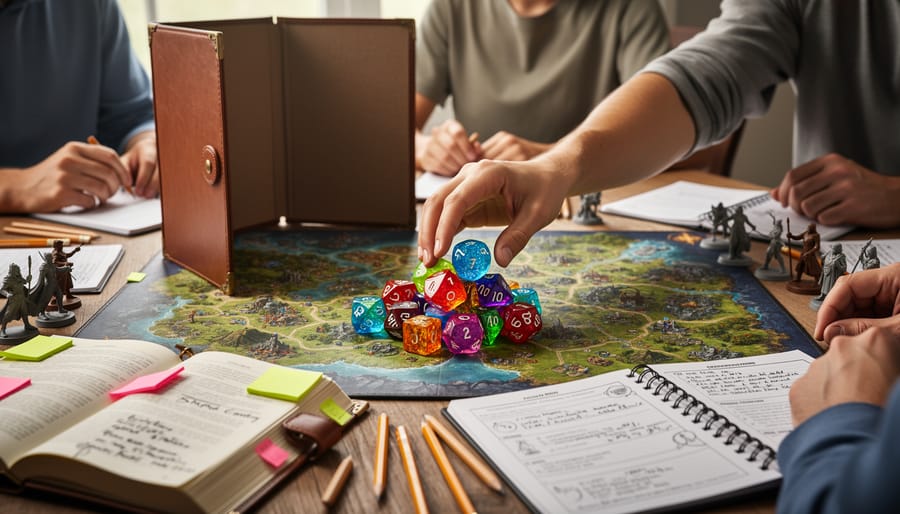
Blades in the Dark delivers criminal crew drama with mechanical precision that works beautifully for timed event formats. You and your crew plan heists, execute daring scores, and manage the fallout, all within a structured session framework that typically wraps in three to four hours. That predictability makes it ideal for convention slots and corporate team-building sessions where you can’t run over schedule.
The system’s “score” structure, plan, execute, consequences, creates natural dramatic arcs perfect for one-shot play. Unlike sprawling campaigns, each session stands alone while building a satisfying narrative. Players make a crew (thieves, smugglers, assassins), pick a target, and jump straight into action using the game’s flashback mechanic instead of spending an hour debating plans. It keeps things moving and delivers the high-stakes tension audiences love when you’re streaming sessions.
For event organizers, Blades offers tactical depth that appeals to strategy-minded gamers while remaining accessible enough for newcomers to grasp in a quick rules briefing. The dice pool system creates visible tension, rolling handfuls of dice and watching for successes generates table energy that translates well to broadcast setups. Teams face meaningful choices about risk versus reward, making it engaging for both participants and spectators.
The collaborative worldbuilding and crew dynamics also work exceptionally well for corporate team-building scenarios, encouraging communication and creative problem-solving under pressure without the combat focus of traditional fantasy systems.
5. Kids on Bikes/Tales from the Loop, Accessible Gateway Systems
When you’re setting up a gaming event that needs to welcome complete newcomers alongside seasoned players, Kids on Bikes and Tales from the Loop stand out as perfect gateway systems. Both games strip away complex mechanics in favor of collaborative storytelling, making them accessible to anyone who’s watched Stranger Things or played adventure video games.
Kids on Bikes drops players into small-town mysteries with simple character creation that takes minutes rather than hours. Players describe their character through descriptive traits instead of number-crunching stats, which means first-timers can jump in without feeling overwhelmed by rulebooks. Tales from the Loop delivers similar accessibility wrapped in 1980s sci-fi nostalgia, where kids investigate strange phenomena in Swedish suburbs gone weird.
These systems excel at campus esports events where you’re trying to broaden your audience beyond competitive shooters and MOBAs. The nostalgic themes resonate across age groups, creating natural conversation starters at mixed-demographic venues. Sessions run smoothly in 90-minute blocks, fitting neatly into event schedules without requiring marathon commitments.
The streamlined rules also mean facilitators need minimal training compared to crunchier systems. You can staff these tables with enthusiastic volunteers rather than hunting for experienced game masters, making them logistically friendly for venues testing TTRPG integration for the first time.
6. Call of Cthulhu, Horror for Immersive Events
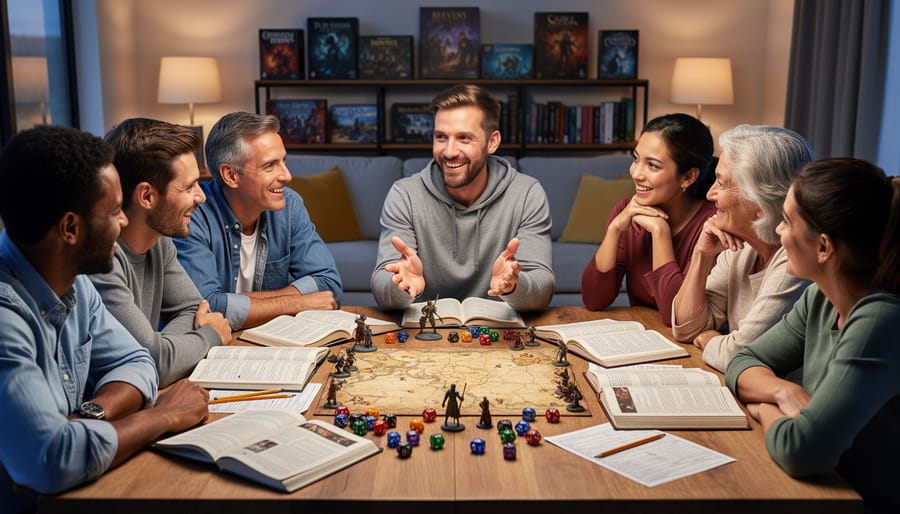
Call of Cthulhu turns investigative horror into appointment viewing. The system’s core mechanic, sanity loss, creates genuine tension that translates exceptionally well to spectator experiences. When players fail sanity checks and their characters descend into madness, the shift from rational investigation to panicked desperation hooks audiences in ways traditional combat encounters can’t match.
The investigative structure makes Call of Cthulhu perfect for a proper live streaming setup. Unlike combat-heavy systems where dice rolls dominate, Lovecraftian horror thrives on player reactions, whispered theories, and the mounting dread visible on faces when they realize they’re outmatched. Overhead cameras capture the entire table dynamic while close-ups catch those crucial moments of realization.
The system pairs naturally with professional production broadcast features. Live tickers tracking each character’s remaining sanity points create the same tension as health bars in competitive gaming. Broadcast commentary teams can analyze investigative choices and foreshadow consequences without spoiling mysteries. Audience polls on which lead to pursue next turn passive viewers into active participants.
For event broadcasting Call of Cthulhu delivers self-contained scenarios that run two to four hours, ideal for scheduled event blocks. The inevitable descent into chaos creates memorable moments that attendees discuss long after the convention ends.
Integrating TTRPGs into Your Gaming Event Setup
Adding tabletop RPG systems to your gaming venue requires thoughtful planning, but the infrastructure overlap with esports setups makes integration surprisingly smooth. The key is treating TTRPG stations as collaborative content zones rather than silent gaming corners.
Start with your broadcast equipment. Overhead cameras capture dice rolls, character sheets, and miniatures while facial cams track player reactions, the emotional beats that make streamed TTRPG sessions compelling. Mount boom mics or boundary microphones above each table to pick up group banter without individual headsets cluttering the space. For events mixing console tournaments with tabletop sessions, consider these essentials:
- Overhead cameras angled to show the full table surface and dice rolls
- Boundary or shotgun microphones positioned to capture all players without individual mics
- Adjustable lighting that illuminates character sheets and miniatures without glare
- Staggered scheduling blocks: 3-hour TTRPG sessions during tournament downtime or elimination rounds
- Simple briefing sheets explaining system basics and house rules for drop-in players
Scheduling matters. Most systems on this list run well in focused three-hour blocks, perfect for fitting between console tournament brackets or as evening programming after competitive play wraps. Dedicated kiosk spaces with comfortable seating, table space for materials, and visual separation from high-energy esports stations create the right atmosphere.
Market the hybrid experience by emphasizing variety. Promote specific systems by name, “Try Call of Cthulhu horror one-shots” or “Drop-in D&D between matches”, rather than generic “board games available” messaging. Highlight pre-scheduled game master-led sessions as premium experiences alongside open-play options, and cross-promote to both competitive gamers seeking downtime and narrative-focused players curious about the esports side of your venue.
Frequently Asked Questions
How long do tabletop RPG sessions typically run at gaming events?
Most TTRPG sessions at events run between 2-4 hours, with one-shots designed for convention play averaging around 3 hours. Systems like Blades in the Dark fit neatly into shorter 2-hour slots, while D&D 5th Edition adventures often work best with 3-4 hours for a satisfying arc.
What’s the ideal player count for event-based TTRPG sessions?
Four to six players creates the sweet spot for most systems, balancing engagement with manageable table dynamics. Kids on Bikes works well with smaller groups of 3-4, while Powered by the Apocalypse games can accommodate up to 6 comfortably without bogging down.
Can TTRPGs work in competitive tournament formats?
While TTRPGs aren’t traditionally competitive, some organizers run timed challenges where tables compete for objectives or creative solutions judged by audience vote. Most event organizers position TTRPGs as collaborative experiences that complement competitive esports rather than replace them.
Should we use digital or physical materials for event TTRPGs?
Hybrid setups work best: physical dice and character sheets create tactile engagement, while digital tools handle maps and reference materials on tablets or overhead displays. Virtual tabletop platforms offer excellent streaming integration but require reliable internet and additional setup time.
Where can event organizers find experienced game masters?
Local gaming stores, university gaming clubs, and community organizations often maintain lists of GMs available for hire. Many experienced players attend events like RPGA-Con 2026 specifically to network and offer facilitation services for corporate or convention bookings.
These practical considerations matter less than you might think once you run your first event. The TTRPG community tends to be welcoming and flexible, adapting to whatever setup you provide. Start with a single table running D&D or Pathfinder during downtime between esports matches, gauge audience interest, then expand from there. The systems we’ve covered handle various group sizes and time constraints gracefully, letting you test different formats without major investment.
The tabletop RPG landscape in 2026 is thriving, and event organizers who embrace it will find themselves ahead of the curve. The crowdfunding success stories and packed schedules at events like RPGA-Con demonstrate that TTRPGs aren’t a niche throwback, they’re a legitimate, growing segment of gaming culture that complements your esports offerings perfectly.
Whether you’re running a multi-day convention or a corporate team-building session, there’s a system on this list that fits your needs. D&D 5th Edition remains the safest bet for broad appeal, while Pathfinder 2nd Edition speaks directly to tactically-minded players. Narrative systems like Powered by the Apocalypse games or Blades in the Dark create compelling streaming content with minimal rules overhead, and accessible options like Kids on Bikes open your events to younger audiences.
Don’t feel locked into one choice. The beauty of integrating TTRPGs into your gaming setup is the flexibility to experiment. Start with a single session at your next event, gauge audience response, and expand from there. The collaborative storytelling that defines these systems creates memorable experiences that participants discuss long after the tournament brackets are forgotten.