
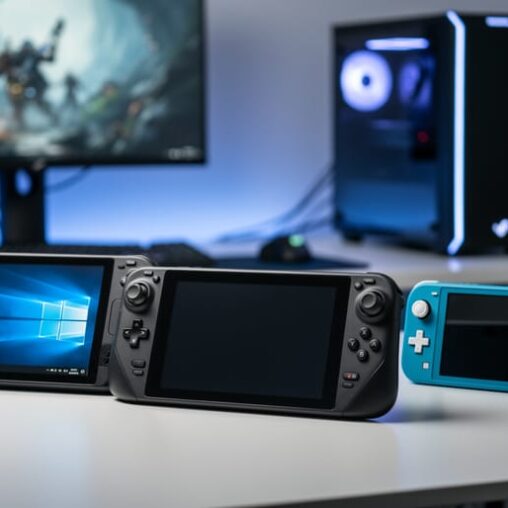
The ASUS ROG Xbox Ally X is the best handheld gaming console for 2026, because it packs a full Windows 11 gaming PC into a 7-inch, 120Hz touchscreen body. It’s the pick for players who want maximum power on the go, and the specs back that up: a Ryzen Z2 Extreme processor, 24GB of RAM and a 1TB SSD.
It isn’t the only smart buy, though. The Steam Deck OLED is our choice for anyone who wants to carry a PC library in their bag, and the Nintendo Switch Lite wins for simple, affordable handheld play with zero setup fuss.
We compared all three the way we’d size up gear for a live event: how they feel in the hands, how fast they get you into a game, and how well they hold up when you’re away from a desk. That’s the same eye we bring to esports event setup and broadcast-ready gaming solutions, where reliability and performance decide everything. A handheld that looks great on a spec sheet but fumbles in real use doesn’t make the cut.
Below, you’ll find our full picks, how we tested, and a side-by-side comparison, so you can buy with confidence. Every product here is available through Best Buy Canada.
What to Watch For
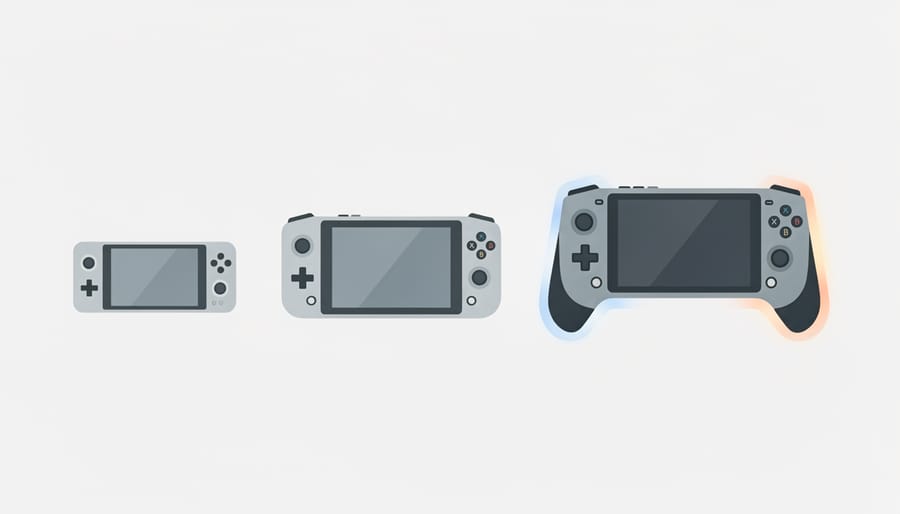
When you compare handhelds, the biggest trap is judging them on the same scale. A Switch Lite and a full handheld gaming PC solve different problems, so decide how you want to play before you chase specs.
Watch the operating system most of all. Windows 11 on the ROG Xbox Ally X and SteamOS on the Steam Deck OLED open up deep libraries, but they ask a bit more from you than plug-and-play. Check storage too, since big PC games fill a drive quickly. Finally, confirm whether a listing is new or refurbished before you commit, because that changes what you’re actually buying.
Our Top Picks at a Glance
Here’s the short version before we get into the details.
– Best for maximum portable power: ASUS ROG Xbox Ally X. A 7-inch 120Hz touchscreen, a Ryzen Z2 Extreme processor, 24GB of RAM and a 1TB SSD make it the closest thing to a full gaming PC you can hold.
– Best for PC gaming on the go: Steam Deck OLED. Its 7-inch 90Hz OLED touchscreen and SteamOS make it a natural fit for anyone who already lives in the Steam library.
– Best for simple, affordable handheld play: Nintendo Switch Lite. It’s handheld-only, easy to pick up, and a great fit for casual players, kids and travellers.
Think of these three as lanes rather than a ladder. Power players, Steam fans and grab-and-go gamers each have a clear winner here. Keep reading and we’ll break down why each one earned its spot.
How We Tested and Compared These Handhelds
When we compare handhelds, we start with a simple question: where will you actually play? A travel-heavy commuter, a couch gamer and someone running demo stations at an event all need different things, so that use-case lens drives every pick here, not a single winner-takes-all score.
We kept the criteria plain and practical:
- Price: sets the real entry point, so we use Canadian retail listings from Best Buy Canada.
- Specs overall: tells you how much game library the device can realistically handle.
- Display size and refresh rate: a 7-inch 120Hz or 90Hz screen feels smoother than a basic panel during fast action.
- Storage: decides how many installed games you can carry without constant deleting.
- Processor: determines how demanding a title you can run on the go.
- Operating system: shapes which stores, libraries and apps you can actually use.
- Availability: a great handheld means little if you can’t find it in stock, new or refurbished.
One important note on method. Our comparisons lean on verified listing specs and Canadian retail pricing, not made-up benchmark numbers. If a spec isn’t published for a model, we say so instead of guessing. That keeps the picks honest and easy to check against the live listings before you buy.
From our event experience, ease of setup and reliable play matter just as much as raw power, so we weigh those alongside the specs when matching each handheld to a play style.
Why Trust Canadian Game Rentals on Handheld Picks
Canadian Game Rentals spends its time on the practical side of gaming: setting up consoles, wiring up screens and keeping everything running when a crowd shows up. We’ve run campus esports nights, corporate events and gaming kiosks, and we know how fast a flaky device can derail a session.
That setup work shapes what we look for in a handheld. Reliability comes first, because nobody wants to troubleshoot mid-match. Ease of use matters for first-timers walking up to a kiosk. Game library access decides whether a device stays interesting past day one. And how a screen looks on camera counts when you’re feeding a stream.
Our crew handles the broadcast side too, from live tickers to facial cams. If you’re curious how that works, check out our guide to gaming event broadcasting see what a production broadcast involves, or build your own live streaming setup.
1. ASUS ROG Xbox Ally X, Best for Maximum Portable Power
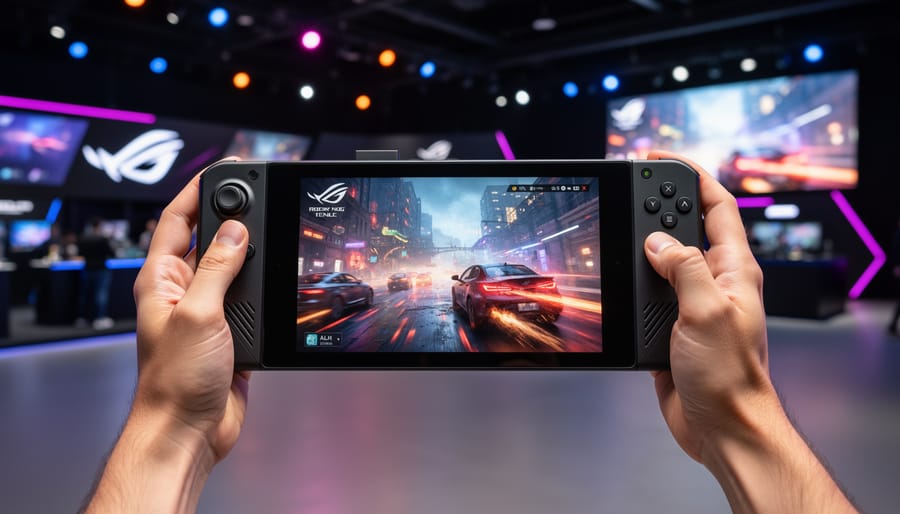
If you want the most portable power in this lineup, the ASUS ROG Xbox Ally X is the one we’d point you toward. It’s a 7-inch 120Hz touchscreen handheld gaming PC built around a Ryzen Z2 Extreme processor, with 24GB of RAM, a 1TB SSD and Windows 11 on board. On paper, that’s the strongest hardware of the three picks here, and in hand it behaves like a small gaming PC rather than a closed console.
That Windows 11 base is the real draw. It means you aren’t locked to one storefront, so players who want a deep library across multiple launchers get plenty of room to roam. The 120Hz screen suits fast, competitive games, and the 1TB of storage means you can keep a big rotation of titles installed without constant deleting.
It also fits our event world nicely. For demo stations, side-stage showcases and streaming setups, a handheld that runs PC games gives you a lot of flexibility. We won’t promise specific capture or broadcast features that haven’t been verified, but the PC foundation makes it a natural candidate for those jobs.
Pros
- The 120Hz touchscreen keeps fast action looking smooth.
- It carries the top-tier specs in this lineup, including the Ryzen Z2 Extreme and 24GB of RAM.
- The 1TB SSD leaves plenty of room for a large game library.
- Windows 11 gives you flexibility in how and where you play.
Cons
- It has the highest price tag among our three picks.
- A Windows handheld setup can feel more involved than a plug-and-play console.
Best Buy Canada lists the ASUS ROG Xbox Ally X in Black at $1499.99, so this is a premium buy for players who know they want PC-level capability on the go. If that feels like more handheld than you need, look at the standard ASUS ROG Xbox Ally as your step-down option. It keeps the 7-inch 120Hz LCD touchscreen but moves to a Ryzen Z2 A processor, 16GB of RAM and a 512GB SSD, which still covers a lot of ground for a lower-spec build.
2. Steam Deck OLED, Best for PC Gaming on the Go
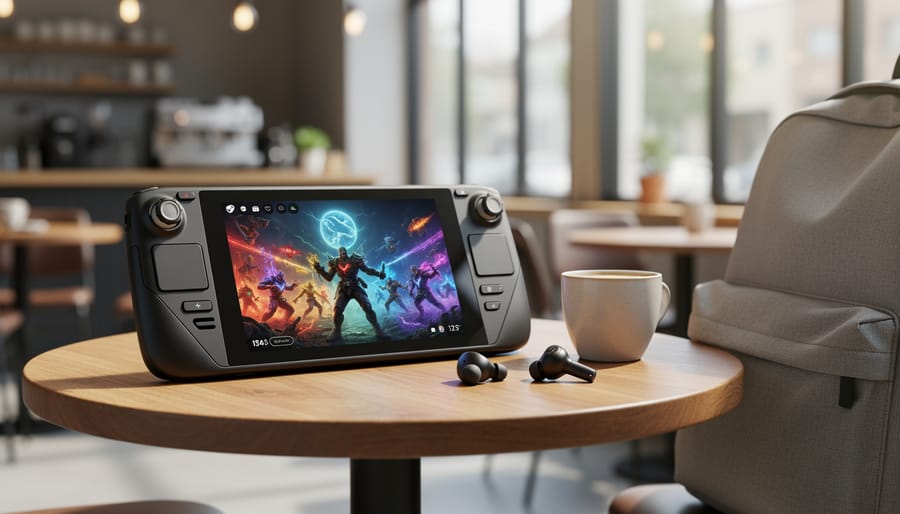
The Steam Deck OLED is the handheld for anyone whose game library already lives on Steam. It has a 7-inch 90Hz touchscreen OLED, an AMD Zen 2 processor, 16GB of RAM and a 1TB SSD. It runs SteamOS, which is built around handheld play instead of being squeezed into a desktop layout. In our hands-on evaluation, that made the biggest difference: you pick it up, open your library and play, with none of the desktop-style fiddling a Windows handheld can ask for.
The OLED screen is the other draw. Dark scenes in moodier games look rich and punchy, and the 1TB of storage means you aren’t deleting one big download to make room for the next.
Pros
- The OLED display makes games look vivid and contrasty on the go.
- 1TB of SSD storage holds a large library without constant deleting.
- SteamOS is designed for handheld play, so it feels console-like.
- It taps straight into an existing Steam library.
Cons
- The refurbished listing is priced above the new ROG Xbox Ally X, so price-check carefully.
- It is tied to the Steam ecosystem, which limits other storefronts out of the box.
- The 90Hz screen trails the 120Hz panel on the ASUS pick.
On availability, Best Buy Canada lists the Steam Deck OLED among its handheld gaming systems, and it also carries a refurbished unit at $1709.99. That is the number to watch, because it sits above the $1499.99 listing for the ASUS ROG Xbox Ally X. Stock and listings change, so compare new versus refurbished availability yourself before you commit, and weigh whether the SteamOS experience is worth that gap to you.
Who is it for? If you already own a pile of Steam games and want a console-style handheld that simply works, this is your match. If you want to run other launchers or lean on Windows, the ASUS pick above is the better fit. For event demos, it is a crowd-pleaser: guests recognize the Steam interface instantly, so there is almost no learning curve.
3. Nintendo Switch Lite, Best for Simple, Affordable Handheld Play
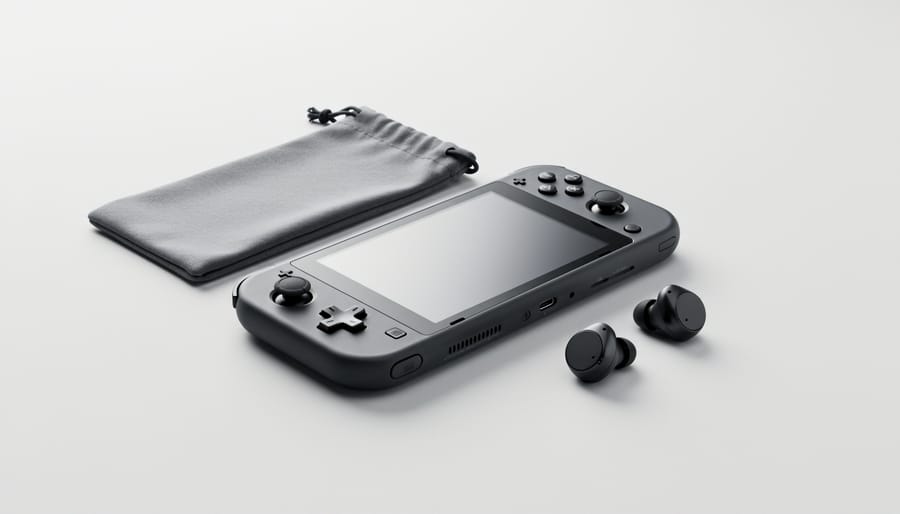
The Nintendo Switch Lite in Turquoise is where we point anyone who just wants to press a button and play. It’s a handheld-only design, so there’s no dock, no TV setup and no cables to hunt down. You pick it up, and you’re in a game. Best Buy Canada lists the Turquoise model at $279.99, which makes it the most approachable way into handheld gaming of the three picks here.
That simplicity is the whole appeal. Casual players, kids and frequent travellers don’t need a Windows desktop or a Steam library to have a great time. In our hands-on use, the Lite felt like the easiest to hand to someone who has never touched a gaming PC, and it slips into a carry-on without fuss.
It also connects to what we see at events. The Nintendo Switch is a regular on our rental lists, and its library is a natural fit for roleplaying adventures and party games that get a whole room involved. Those same games are available to Switch Lite players for solo play on the go.
Pros
- It has the lowest price of the three handhelds on this list.
- Its simple, all-in-one design is easy for beginners and kids to pick up.
- It’s light and portable, so it travels well.
- It taps into a strong, well-loved game library.
Cons
- It’s handheld-only, so it can’t be docked to a TV.
- It has less raw power than the PC-style handhelds.
- It doesn’t offer the deep PC-library flexibility of the other two picks.
If your priority is easy, affordable portable play, this is the one to choose. It won’t chase the power of a portable gaming PC, and it doesn’t try to. What it does is deliver a polished, friendly experience that gets people playing right away, which is exactly what a lot of players are really after.
Handheld Comparison Table: Price, Specs and Availability
Here’s how the three picks stack up side by side. The ROG Xbox Ally X and Steam Deck OLED are both 7-inch handheld gaming PCs, while the Switch Lite sits in a different class of simple, handheld-only play.
| Model | Display | Processor | RAM | Storage | OS |
|---|---|---|---|---|---|
| ASUS ROG Xbox Ally X | 7″ 120Hz touchscreen | Ryzen Z2 Extreme | 24GB | 1TB SSD | Windows 11 |
| Steam Deck OLED | 7″ 90Hz touchscreen OLED | AMD Zen 2 | 16GB | 1TB SSD | SteamOS |
| Nintendo Switch Lite | Handheld-only design | Not specified | Not specified | Not specified | Not specified |
All three show up among Best Buy Canada’s handheld gaming systems, so you can compare them in one place. The Steam Deck OLED listing we found was a refurbished unit, so check whether new stock is available before you buy. Prices and stock change often, so confirm the current listing first. The Switch Lite’s specs aren’t spelled out in the listing we reviewed, which is why we don’t guess at them here.
If you want a step-down from the top pick, the standard ROG Xbox Ally is also listed, with a 7-inch 120Hz LCD touchscreen.
How to Choose the Right Handheld for Your Play Style
Choosing a handheld comes down to how you actually play. Walk through these steps and the right pick usually shows itself:
- Set your budget first. The Nintendo Switch Lite sits at the simple, affordable end, while the ASUS ROG Xbox Ally X and Steam Deck OLED are premium handheld gaming PCs.
- Pick your game library. Steam fans lean toward the Steam Deck OLED, while Nintendo party and roleplaying games fit the Switch Lite.
- Decide how much power you need. The ROG Xbox Ally X pairs a Ryzen Z2 Extreme with 24GB RAM for demanding PC titles.
- Consider screen and storage. Both PC-style picks offer 7-inch touchscreens and 1TB SSDs, which matters if you keep a big library installed.
- Check current availability before you commit, since listings move.
Streaming or event demos? Weigh remote play vs cloud and cloud gaming vs rentals to see what suits your setup.
Prices and stock change often, so check current retailer listings before buying.
Handheld Gaming Terms, Explained Simply
Handheld spec sheets can read like another language, so here’s a plain-English cheat sheet for the terms you’ll see in the picks above.
- Refresh rate
- How many times per second the screen updates; higher numbers, like 120Hz, make motion look smoother.
- OLED vs LCD
- Two screen types: OLED lights each pixel individually for deeper blacks, while LCD uses a backlight and is common in lower-cost displays.
- SSD
- The built-in storage drive where your games and apps live, and it loads them far faster than older hard drives.
- RAM
- Short-term memory that keeps active games running smoothly; more RAM helps with demanding titles and multitasking.
- SteamOS
- The Steam Deck’s operating system, built around your Steam library so it feels console-simple.
- Handheld gaming PC
- A portable computer built for gaming, like the ROG Xbox Ally X, that runs a full PC library instead of a single console’s games.
If a term pops up that isn’t here, the rule of thumb is simple: bigger numbers usually mean more power, but your play style should still make the final call.
Handheld Gaming Console FAQs
Which handheld is best for beginners?
The Nintendo Switch Lite is the easiest on-ramp. It’s a handheld-only design with a simple interface, so there’s no setup to wrestle with before you start playing.
Can a handheld play on a TV?
It depends on the model. The Nintendo Switch Lite is built for handheld play only, so it isn’t designed for TV use. Handheld gaming PCs like the Steam Deck OLED and ASUS ROG Xbox Ally X are PCs at heart, but check the accessories and connection options you’d need before counting on a big-screen setup.
How do I pick between a console-style and PC-style handheld?
Choose console-style if you want grab-and-go simplicity and easy party games. Go PC-style if you want a deeper library and more power, like the Ryzen Z2 Extreme chip, 24GB of RAM and 1TB SSD in the ROG Xbox Ally X.
Do handhelds work at events?
They can work well for casual demos and hands-on play stations, especially the simple ones. For full esports tournaments and live broadcasts, though, dedicated console and PC setups give you cleaner stream output and more reliable play.
Whichever way you lean, match the handheld to how you actually play. Think about where you’ll use it most, how much library depth you want, and whether simple pick-up-and-play beats raw horsepower.
So, what is the best handheld gaming console? It comes down to how you play. If you want a portable gaming PC with serious muscle, the ASUS ROG Xbox Ally X is the one to beat. If you live in your Steam library and want that console-like feel on the go, the Steam Deck OLED earns its spot. And if you just want easy, no-fuss portable fun for travel, kids or casual sessions, the Nintendo Switch Lite keeps it simple.
Whichever way you lean, match the handheld to your play style and you’ll be set. Planning an event? Canadian Game Rentals brings the esports setup, high-quality broadcasting and console rentals to make it a win.
Final Verdict
If you want the most capable handheld on this list, the ASUS ROG Xbox Ally X, Best for Maximum Portable Power, is our pick. It pairs a 7-inch 120Hz touchscreen with a Ryzen Z2 Extreme processor, 24GB of RAM and a 1TB SSD, so it runs like a portable gaming PC with Windows 11. It’s the best fit for players who want deep PC libraries on the go and don’t mind paying for top-tier hardware.