
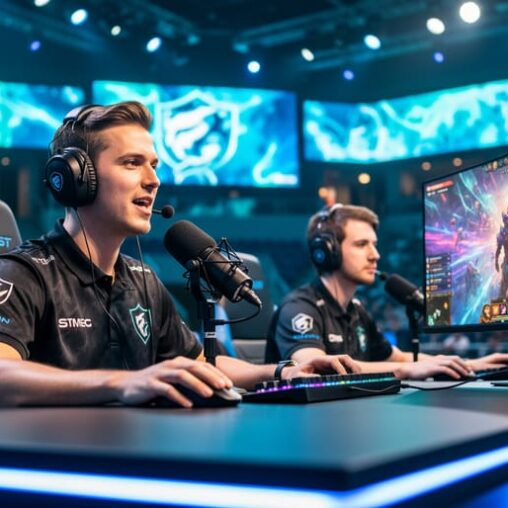
TV commentary transforms passive viewing into an immersive, high-energy experience by adding expert analysis, play-by-play narration, and audience engagement to your esports events. Professional commentary elevates tournaments, campus gaming nights, and corporate competitions from simple matches into memorable broadcasts that keep viewers invested in every moment, whether they’re watching in-person or streaming remotely.
The difference between a standard gaming setup and a broadcast-ready event comes down to two core elements: the right talent and the technical infrastructure to support them. Commentary isn’t just someone talking over gameplay. It requires commentators who understand the game mechanics, can read the flow of competition, and deliver insights that help both hardcore fans and casual viewers follow the action. Check out these commentary examples to see how professional voices shape the viewing experience.
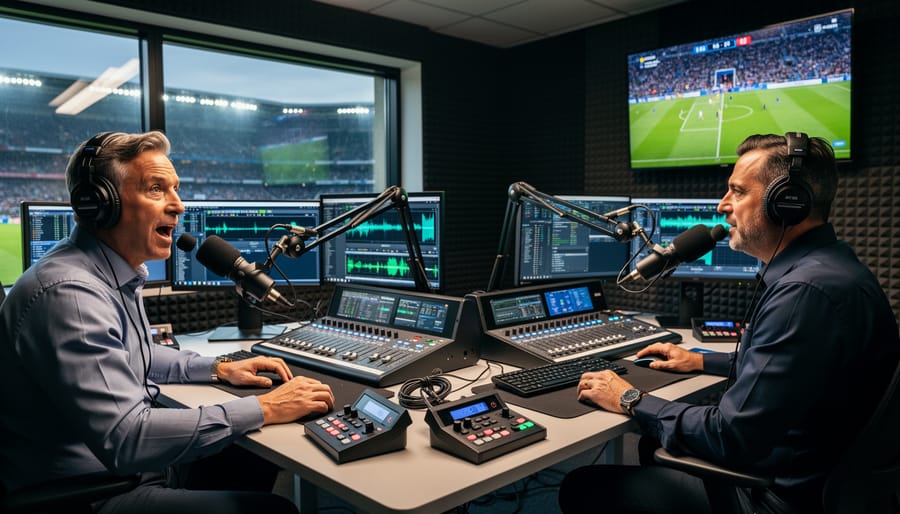
On the technical side, quality commentary demands dedicated audio equipment, mixing capabilities, and broadcasting software that synchronizes voice with gameplay footage. Many event organizers underestimate this setup, assuming a basic microphone will suffice. The reality? Clear audio separation, noise reduction, and seamless integration with your streaming platform make or break the professional feel of your broadcast.
For 2026 events, commentary has become an expected feature rather than a luxury add-on. Audiences accustomed to professional esports productions now anticipate that same polish at local tournaments and corporate gaming events. Whether you’re hosting a 16-team bracket or a casual Friday night showdown, adding skilled commentary instantly raises the perceived value and entertainment factor of your event.
What TV Commentary Adds to Your Gaming Event
Professional commentary turns matches into stories. Without commentary, you’re watching players click buttons and make decisions, which might be riveting if you already understand the meta. But add skilled commentators, and suddenly every play has context, every mistake has consequences, and every clutch moment hits harder because someone’s there to articulate exactly what just happened and why it matters.
The real power of commentary lies in accessibility. Your audience isn’t homogeneous. You’ve got hardcore fans who recognize frame-perfect execution, casual viewers who enjoy the spectacle, and complete newcomers trying to understand why everyone’s screaming about a headshot. Good commentators bridge these gaps simultaneously, calling out advanced techniques for the experts while explaining broader strategies for everyone else. They’re translators, turning complex gameplay into something anyone can follow and appreciate.
Commentary also manufactures energy when the match doesn’t. Even top-tier esports have lulls, setup phases, farming sequences, respawn timers. Skilled commentators fill these moments by building anticipation, breaking down team compositions, or recapping earlier rounds. They keep viewers engaged during the slow parts so everyone’s primed when the action explodes.
Beyond explanation, commentary creates emotional investment through narrative. Commentators highlight rivalries, underdog stories, comeback potential, and tournament stakes. They give viewers reasons to care beyond just watching skilled play. That emotional layer is what separates forgettable matches from memorable broadcasts, and it’s the cornerstone of broadcast transformation that makes your event feel legitimate and professional, not like someone’s basement stream, but like something worth gathering your audience to watch together.
The Commentary Setup: Equipment and Technical Requirements
Syncing Commentary with Live Gameplay Feeds
Getting commentary and gameplay to line up perfectly is more challenging than most people realize, and viewers notice immediately when something’s off. When your commentators react to a kill three seconds before it appears on screen, or when player cams show excitement that doesn’t match what viewers are seeing, the entire broadcast feels amateurish.
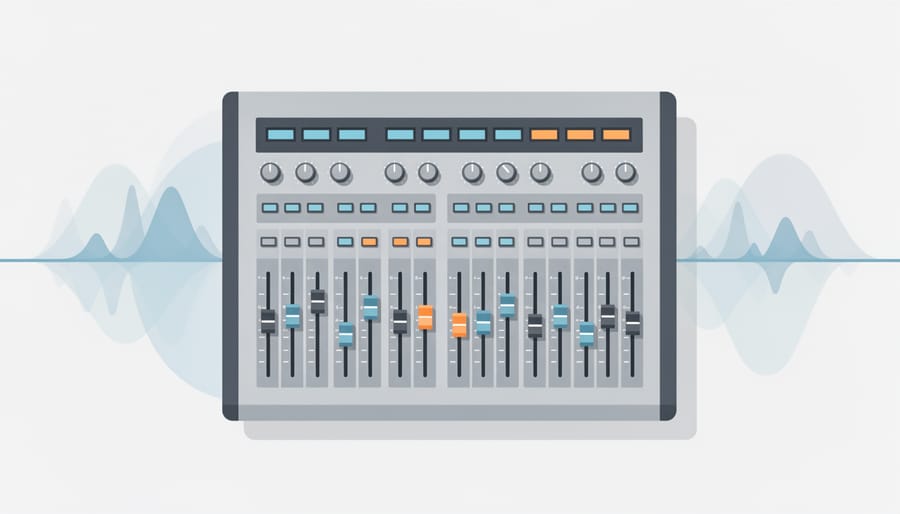
The technical reality involves managing audio-video synchronization timing across multiple video sources. Your gameplay feed, player facial cams, live score tickers, and commentary audio all need to arrive at the final output simultaneously. Most streaming setups introduce 1-3 seconds of delay through encoding processes, and each additional element compounds this latency.
Professional broadcasts solve this through hardware encoders and mixing boards that delay faster feeds to match slower ones. Your commentary team should monitor the same feed viewers see, not the direct gameplay output, so their reactions sync perfectly with what’s broadcast. Some setups use IFB systems, discreet earpieces feeding the broadcast mix to commentators, ensuring they’re always in time with the action.
The result transforms scattered elements into a unified experience where every reaction, every scoreboard update, and every player expression lands exactly when viewers expect it.
Audio Quality Standards for Professional Broadcasts
Clear audio isn’t just a nice-to-have for commentary, it’s the difference between viewers sticking around and clicking away within minutes. When your commentators sound muffled, distant, or compete with background noise, audiences tune out faster than they would for mediocre gameplay footage.
Professional broadcasts maintain audio levels where commentary sits 3-6 dB above game sound, ensuring voices never get buried beneath explosions or crowd noise. This balance keeps viewers engaged without forcing them to strain or constantly adjust their volume.
Noise cancellation makes or breaks commentary credibility. Background chatter, keyboard clicks, and environmental hum signal amateur production. Quality XLR microphones with cardioid pickup patterns reject off-axis sound, while pop filters eliminate harsh plosives that jar listeners out of the moment.
Audio monitoring matters just as much as recording. Your tech team needs real-time headphone feeds to catch issues before they ruin broadcast segments. A subtle audio problem that persists for five minutes will cost you more viewers than a thirty-second technical pause to fix it.
Consistent audio quality across multiple commentators requires matching gain levels and frequency response. When one voice sounds crisp while another seems underwater, it creates cognitive dissonance that exhausts viewers.
Types of Commentary Styles for Different Events
Different events call for different commentary approaches, and understanding which style fits your audience can dramatically impact engagement. The right commentary transforms viewers from passive observers into invested fans, while the wrong style can leave them confused or bored.
- Play-by-Play Commentary
- Rapid-fire narration of in-game actions as they happen, perfect for fast-paced competitive matches where viewers need moment-to-moment updates. Works best when paired with an analyst to provide context between intense sequences.
- Analytical Commentary
- Deep dives into strategy, player decisions, and meta-game elements that explain why actions matter. Essential for tournaments where audiences want to understand high-level play and appreciate the skill on display.
- Hype Casting
- Energy-focused commentary that amplifies crowd excitement and creates memorable moments through vocal intensity and dramatic flair. Ideal for championship matches and climactic tournament moments where entertainment value peaks.
- Educational Commentary
- Beginner-friendly explanations that break down game mechanics, objectives, and basic strategies without assuming prior knowledge. Perfect for corporate events where executives or non-gaming staff need accessibility.
- Conversational Commentary
- Relaxed, friendly banter that treats viewers like friends watching together rather than a formal broadcast audience. Best suited for campus events and community gatherings where casual engagement matters more than professional polish.
For major tournaments, a blend of play-by-play and analytical TV-style commentary creates the most professional experience. One commentator tracks the action while their partner explains significance, builds storylines around player rivalries, and highlights technical excellence that casual viewers might miss.
Corporate gaming events benefit from educational approaches that don’t alienate non-gamers in the room. Commentary here should focus on universal concepts like teamwork, strategy, and competition rather than game-specific jargon that excludes participants unfamiliar with the title being played.
Campus esports thrive with conversational styles that reflect the social nature of college gaming. Commentary can acknowledge inside jokes, shout out specific teams or players by name, and maintain energy without the formality of professional broadcasts. The goal is making everyone feel included in the community rather than creating distance between commentators and participants.
Finding and Working with Commentary Talent
Building Chemistry Between Commentary Teams
The difference between good commentary and great commentary often comes down to how well your team works together. When commentators have genuine chemistry, their banter flows naturally, creating an energy that pulls viewers in and keeps them engaged through every play.
A dual-commentator setup works best when roles are clearly defined. One takes the play-by-play lead while the other provides analysis and color. This natural back-and-forth prevents awkward silences and talking over each other. The play-by-play commentator narrates the action as it happens, while the analyst jumps in during breathers to explain strategy or predict what teams might do next.
Triple setups add a host or interviewer who bridges segments and brings fresh perspectives. This structure shines during longer broadcasts where variety keeps the energy up.
Building chemistry doesn’t happen instantly. Give your team practice sessions before the event. Let them run through mock commentary on recorded matches. Encourage them to develop inside jokes and catchphrases that feel authentic, not forced. When commentators genuinely enjoy working together, viewers feel it. That comfort translates to better reactions, smoother transitions, and those spontaneous moments that become highlight reels.
Commentary for Campus and Corporate Gaming Events
Campus gaming nights and corporate team-building events don’t need the same intensity as major tournaments, but they absolutely benefit from commentary. The key difference? Your commentators can prioritize fun and accessibility over technical analysis. For university esports clubs running weekly matches, a student commentator who explains basic strategies while cracking jokes with players creates a welcoming atmosphere that builds community rather than intimidating newcomers.
Corporate events call for an even lighter touch. When companies book gaming setups for employee engagement or client entertainment, commentary should emphasize the social experience over competitive play. Think less “here’s a frame-perfect combo execution” and more “Sarah from accounting just pulled off an incredible comeback, let’s see if the marketing team can respond.” The commentator becomes a social facilitator who highlights memorable moments and keeps energy high without requiring deep game knowledge from participants.
Production requirements scale down accordingly. A single wireless microphone and a commentator positioned near the action often suffices, no isolated booth or complex audio mixing needed. Campus events might run commentary through the venue’s existing PA system, while corporate gatherings can use a simple speaker setup that lets nearby attendees hear the action without overwhelming conversations happening elsewhere in the space. The goal isn’t broadcast-quality polish but rather creating an energetic focal point that makes gaming feel special and inclusive for everyone in the room.
Common Commentary Mistakes and How to Avoid Them
Even talented commentators fall into predictable traps that dilute their impact. Knowing these missteps helps you coach your team toward broadcasts that keep viewers engaged rather than tuning out.
Over-explanation kills momentum for experienced viewers. When commentators spend thirty seconds explaining what an “ace” means during a critical round, dedicated fans get frustrated. The fix: tailor depth to your audience. For general-audience corporate events, brief explanations work. For community tournaments, assume baseline knowledge and focus on strategy and execution rather than definitions.
Under-explanation creates the opposite problem. Newcomers at campus events or corporate team-building sessions feel lost when commentators rattle off ability names and meta references without context. Balance this by weaving quick clarifications into play-by-play naturally: “That ultimate ability just wiped the team” gives context without pausing the action.
Dead air might be the most damaging mistake. Silence during gameplay makes viewers think the stream died or commentary disappeared. Fill every moment with observation, setup for upcoming plays, or light banter between rounds. Even acknowledging a quiet moment works better than awkward silence.
Bias toward specific teams or players undermines credibility fast. Commentators cheering for one side makes the broadcast feel unprofessional and alienates half your audience. Train your team to celebrate great plays from anyone while maintaining neutral framing.
Technical jargon overload buries casual viewers in incomprehensible terminology. “They’re running a 1-3-1 split with zone control on rotations” means nothing to most people. Translate strategy into plain language or skip deep tactical breakdowns unless your event specifically targets hardcore fans.
Review past broadcasts together and draw inspiration for your event from what worked and what fell flat. Self-awareness transforms decent commentators into ones who genuinely connect with their audience.
Professional TV commentary isn’t just an add-on, it’s what separates a basic gaming session from an unforgettable esports experience. Whether you’re running a tournament, hosting a corporate team-building event, or bringing competitive gaming to your campus, quality commentary creates the narrative thread that keeps audiences invested from first blood to final victory.
The right commentary setup transforms silent gameplay into a dynamic broadcast. It welcomes newcomers while rewarding dedicated fans. It turns individual matches into stories worth watching and sharing. When you combine professional commentators with solid technical infrastructure, the microphones, mixing boards, and broadcast integration that lets their voices shine, you’re not just hosting an event. You’re creating moments people will remember.
At Canadian Game Rentals, we understand that complete esports events need every piece working together. Our full-service approach includes the broadcast equipment and technical setup that makes professional commentary possible, alongside the consoles, displays, and gaming infrastructure your event demands. When you’re ready to level up from basic competitions to broadcast-quality experiences, we’ve got the tools and expertise to make it happen.